
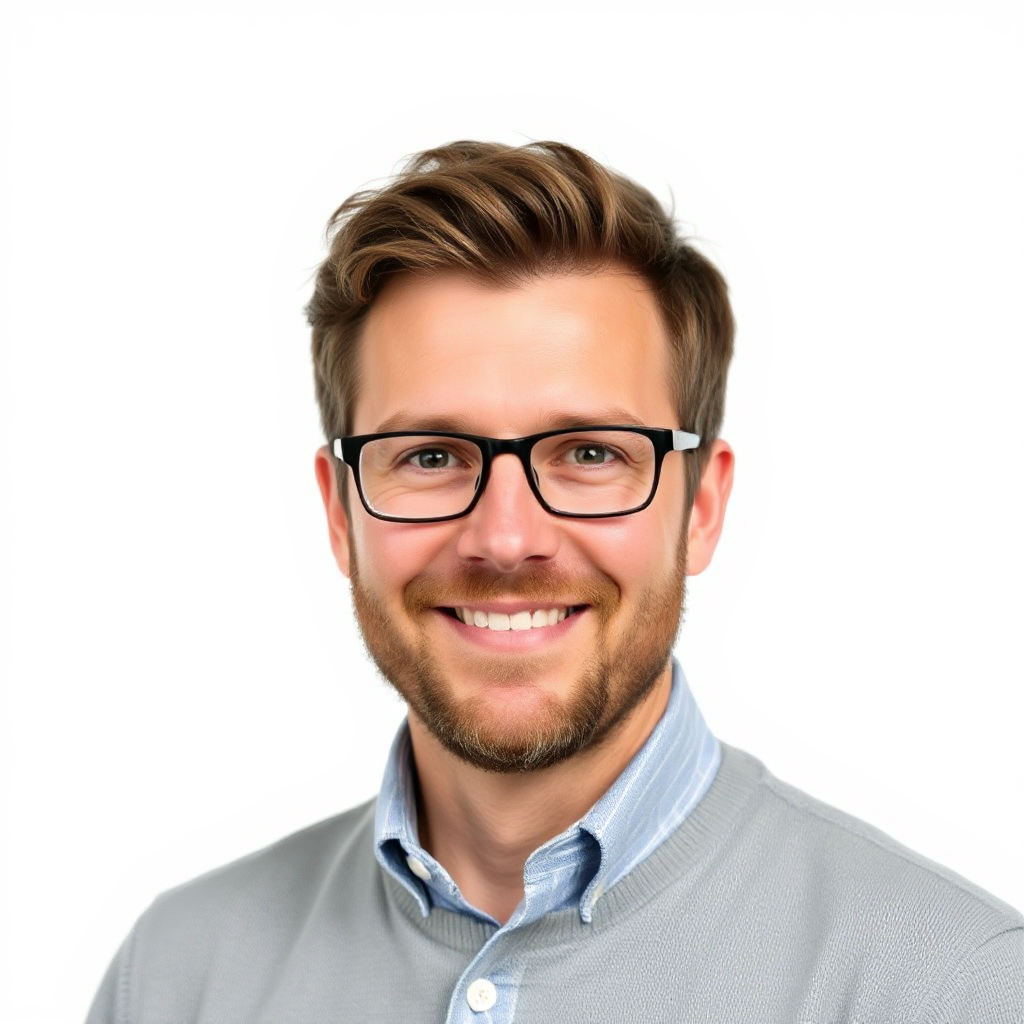

How does it feel to engage in talks with Moscow's officials concerning the conflict in Ukraine?
This question has piqued widespread interest in the wake of several latest sessions of ceasefire talks, which until now appeared to yield minimal progress four years since Russia's full-scale military offensive.
Another round of American-facilitated negotiations is expected to occur in the Swiss city in the coming days. In preparation, a key participant of the Ukrainian leadership's delegation, the diplomat, who has been involved in recent direct military talks, has provided his perspective.
As stated by Kyslytsya, these interactions are business-like and generally devoid of the sort of political and historical grandstanding observed in other forums by Moscow.
"The military have a better understanding of what is going on in the combat zone," he stated in a conversation on Monday morning.
"It's another thing whether they [the Russians] are capable, or not, of reporting [back] accurately…free from cooking or distorting the information," he added.
It is not an easy task to attempt to end a major conflict. The nature of the battlefield in eastern Ukraine - where tens of thousands of drones patrol and strike over a huge so-called "grey zone" between the two sides, while two hundred thousand local residents still reside in the "fortress belt" cities of the Donbas - renders the practical business of separation extremely complicated.
"It is essential to have a clear set of rules and procedures," Kyslytsya said, "along with a way to verify and oversee."
The Involvement of External Parties
A great deal of this work, he said, is complete, thanks in part to the direct participation of US representatives, such as General Alexus Grynkewich and Dan Driscoll.
Clearly not in Ukraine's interest to criticise envoys of the American government, but when Kyslytsya compliments the American team for its efforts, he sounds genuine.
"We must acknowledge the US side for their commitment and their patience," he says, "because they sit in the meetings continuously. They not only watch…they ask questions and they heed our responses."
Kyslytsya was equally positive about the contributions played by the former president's adviser, whom he referred to as "experienced", and wealthy mediator the special representative, whom he characterized as "far more astute individual than the caricature image often presented in the media".
The United States, Kyslytsya said, will play a key role in overseeing any potential ceasefire, with capabilities including satellite and other forms of high-tech surveillance.
"It is necessary to have someone who will play the role of an arbitrator, for the reason that if there is a violation there should be a neutral actor that is reliable [and] authoritative."

Past and Present Oversight Challenges
During an eight-year period before the major invasion in 2022, this monitoring role was handled by the OSCE - a group whose restricted means and absence of punitive powers rendered it largely unable of preventing an intensification.
"It was quite an achievement [for them] just to have two UAVs flying above the territory," Kyslytsya said. "It resembles the Flintstones era in contrast with what we are dealing with today."
In comparison, recent reports suggest that as many as 12,000 unmanned aircraft are operating above the urban center of Pokrovsk at any given moment.
A Personal Perspective on Facing the Adversary
Inquired how he managed to sit across the table from delegates representing a leader in the Kremlin who has shown readiness to expend over a million of his own men to subjugate its neighbor, Kyslytsya, with extensive UN experience, offered his response.
He explained that he'd had a long time of experience.
"I saw much worse. I spent a five-year term in at the UN, three of them before the major war. I would sit in the room with the adversary on a regular basis."
A particular night is etched in his recollection: 23 February 2022.
In the middle of an urgent Security Council session, convened to discuss the looming threat in the country, the ambassador received news that his country was under attack.
At the same time, far away to the eastward in Kyiv, initial far-off explosions signaled as Russia's all-out assault on Ukraine began.
During scenes of intense tension, Kyslytsya tried to persuade Russia's ambassador, the Russian envoy, to contact his superior, the Russian foreign minister, to seek guarantees that Moscow's forces would not cross the border.
"I've already said everything I know today," the Russian diplomat responded, as recalled by his Ukrainian colleague. "I'm not going to disturb the minister at this hour."
The world changed at that instant. Kyslytsya stayed at the United Nations for an additional period prior to returning to the Ukrainian capital.
The Path Ahead
Should the negotiating teams meet again in Geneva this week, he will participate, still working through the contours and mechanics of a ceasefire but waiting continuously for the crucial element of the puzzle to be resolved.
"The war might be stopped by just a single order of an individual to his top general," he said.
"However, the Kremlin dictator [Vladimir Putin] is not prepared for stopping the conflict for the time being."


